
The allure of dropshipping from retail giants like Walmart is powerful. Imagine: finding a hot product cheaper at Walmart, listing it on Amazon or eBay, and pocketing the difference without ever touching inventory. It sounds like the dream, right? For years, countless entrepreneurs have chased this very idea.
But in 2026, the landscape of e-commerce is far more sophisticated, and the rules are clearer (and stricter) than ever. So, let’s cut through the noise and answer the burning questions everyone’s asking: Can you still dropship from Walmart? Is it profitable? And what’s the safest way to build a real, sustainable business around it?
The Siren Song of Walmart Dropshipping: Why Everyone Asks “Can I Dropship from Walmart?”
Walmart is a treasure trove of products. Its vast catalog, competitive pricing, and frequent sales make it incredibly attractive to dropshippers. The idea is simple:
- Find a product on Walmart.com that’s selling for, say, $20.
- List that same product on Amazon or eBay for $35.
- When a customer buys it from you, you order it from Walmart.com and ship it directly to your customer.
- You keep the $15 difference (minus fees).
On paper, it’s brilliant. No inventory risk, no warehouse, no huge upfront capital. This is why “how to dropship from Walmart” remains one of the most searched terms in the e-commerce world. It taps into that universal human desire for financial freedom and a low-barrier entry to entrepreneurship.
The Harsh Reality: Why Traditional Walmart Dropshipping is a Minefield in 2026
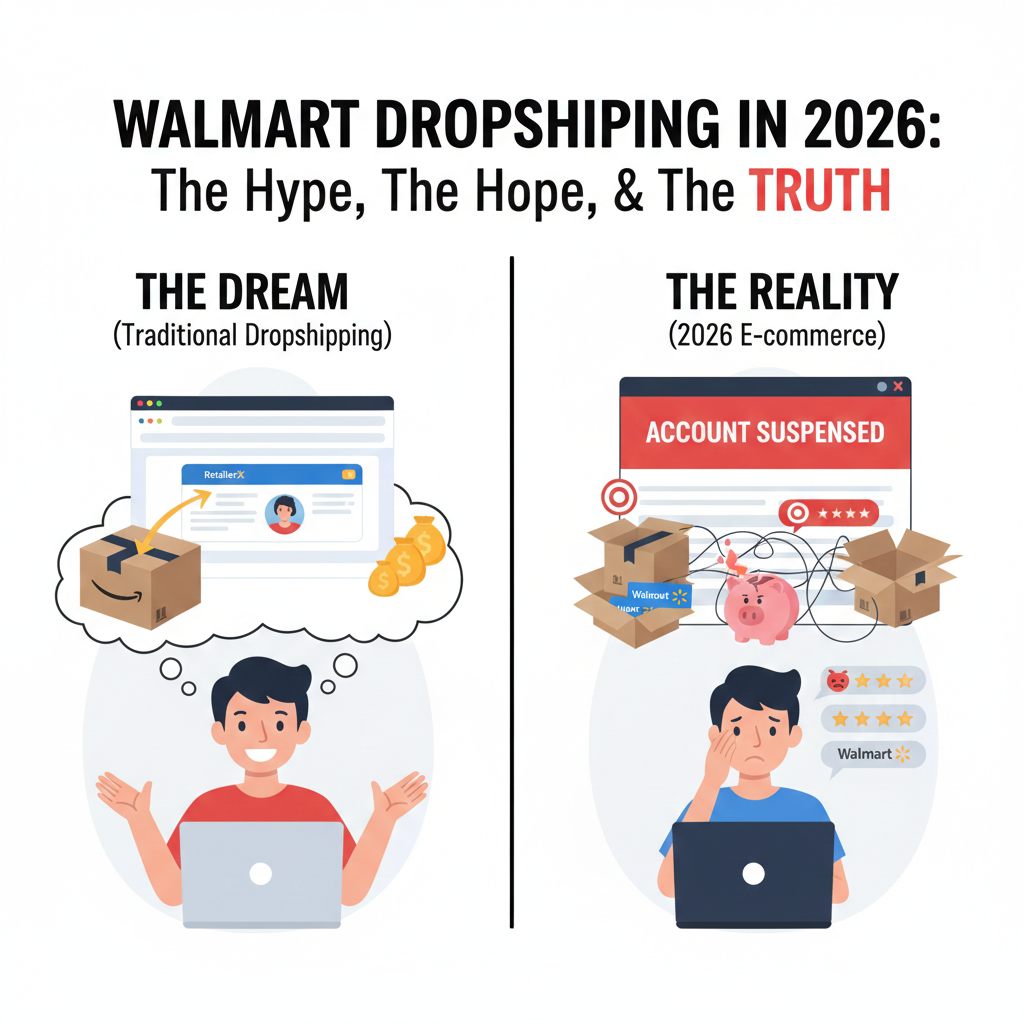
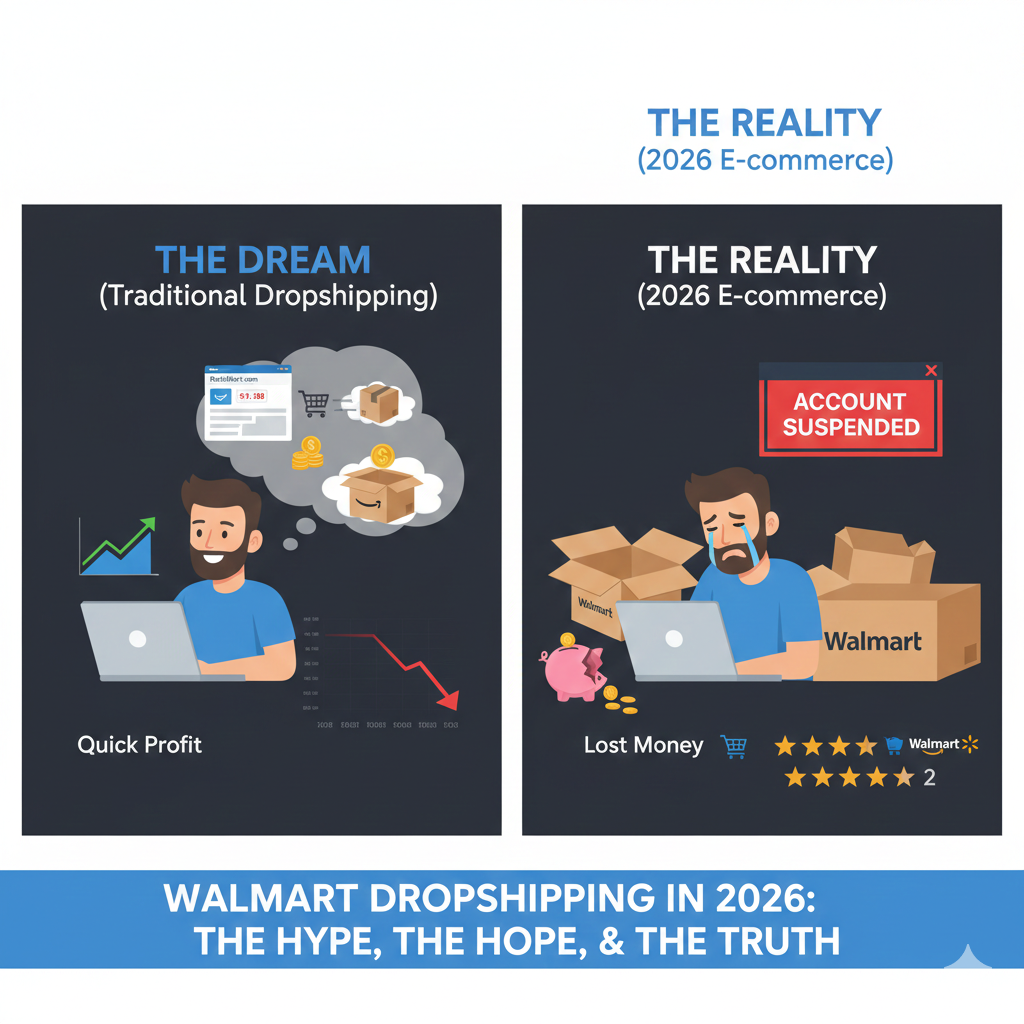
While the dream is compelling, the reality of traditional dropshipping from Walmart (or any major retailer) directly to Amazon/eBay customers has become a dangerous game. Both Amazon and eBay have significantly tightened their policies, and for good reason: they want to protect their customer experience.
Here’s why the old way is riddled with problems:
- Policy Violations (The Big One):
- Amazon: Amazon’s dropshipping policy explicitly states: “You are prohibited from shipping orders with packing slips, invoices, external packaging, or other information indicating a seller name or contact information other than your own.” When a customer receives a product in a Walmart box with a Walmart packing slip, you are violating this.
- eBay: While eBay’s policy is slightly more lenient on the packaging front, it still emphasizes that you must ensure a seamless customer experience, which retail packaging often disrupts. They also require you to be responsible for fulfillment within the stated shipping times.
- Customer Confusion and Dissatisfaction: Imagine ordering a product from an Amazon seller, only to receive it in a Walmart box. What’s your first thought?
- “Did I get ripped off?”
- “Why did I pay more?”
- “This isn’t professional.” This immediately erodes trust and often leads to negative reviews, A-to-Z claims on Amazon, or buyer protection cases on eBay.
- High Return Rates: When customers realize they overpaid for an item that clearly came from Walmart, they often initiate returns. Handling these returns can be a logistical nightmare, especially if Walmart’s return policy doesn’t align with Amazon/eBay’s.
- Inventory Headaches: Walmart’s stock can fluctuate rapidly. If an item sells out after you list it, you’re left with a cancelled order, a negative mark on your seller performance, and a very unhappy customer.
- Account Suspension Risk: Repeated policy violations or poor customer metrics will lead to your Amazon or eBay account being suspended or even permanently banned. This is every seller’s worst nightmare and can quickly obliterate your entire business.
The Smarter Way: Introducing the 2-Step Dropshipping Model (The Path to Sustainability)
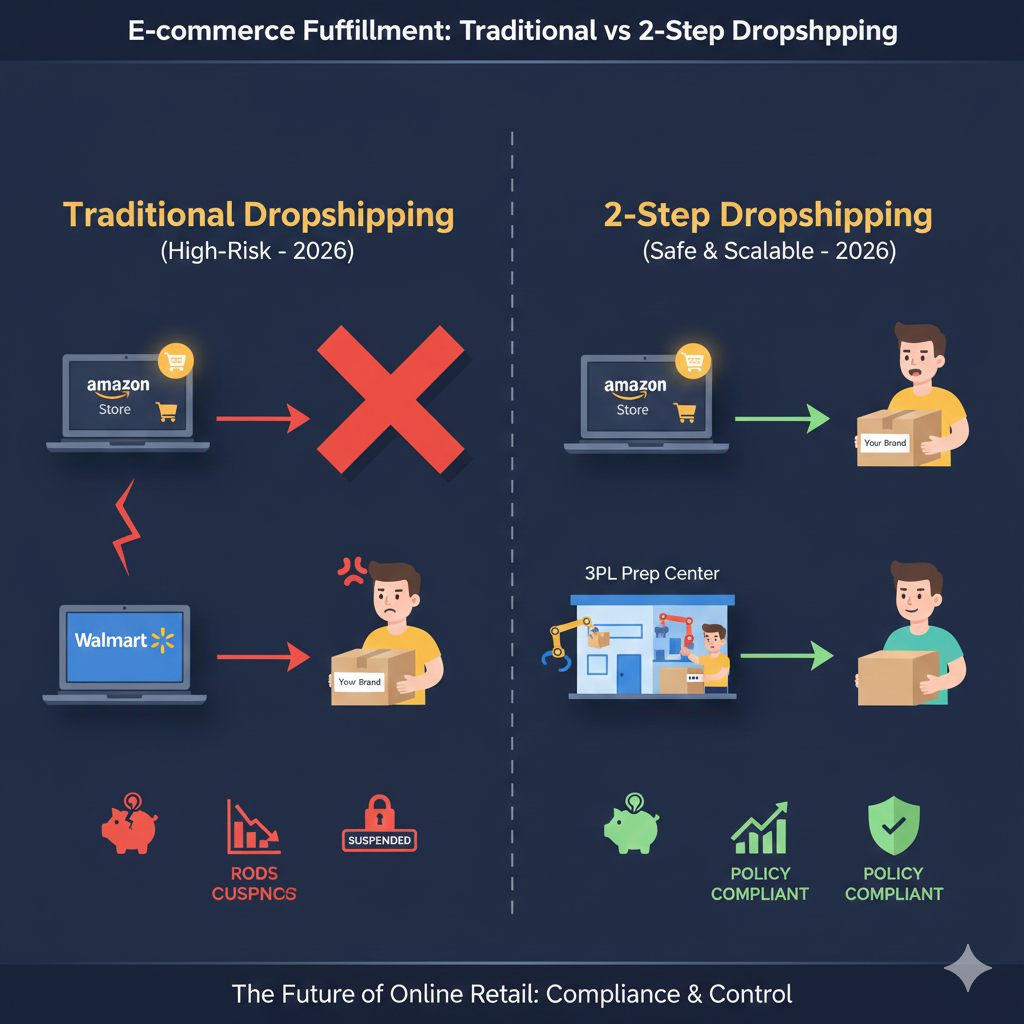
So, does this mean you can’t leverage Walmart’s amazing products for your e-commerce business? Not at all! It just means you need to evolve your strategy to meet Amazon and eBay’s demands for professionalism and customer experience. Enter the 2-Step Dropshipping Model.
This model transforms a risky retail arbitrage approach into a compliant, sustainable, and scalable business. It’s how smart sellers are still finding success with retail sourcing in 2026.
Here’s how the 2-Step Model works:
- Step 1: The Initial Purchase & Ship to a Prep Center.
- You find a profitable product on Walmart.com (or any other retail website).
- When a customer buys it from your Amazon or eBay store, you purchase the item from Walmart.com.
- Crucially, instead of shipping it directly to your customer, you ship it to a dedicated 3PL (Third-Party Logistics) Prep Center. This Prep Center acts as your mini-warehouse.
- Step 2: Inspect, Repackage, and Ship to the Customer.
- At the Prep Center, your item undergoes a crucial transformation:
- Inspection: The item is checked for damage or defects before it reaches your customer.
- De-branding: All Walmart (or other retailer) packaging, price tags, and invoices are removed.
- Re-packaging: The item is placed in a plain, unbranded box or poly mailer.
- Your Branding: A new shipping label is applied with your business name and return address.
- Final Delivery: The item is then shipped from the Prep Center directly to your Amazon or eBay customer.
- At the Prep Center, your item undergoes a crucial transformation: